Abrahams’ Clinical Human Anatomy

Abrahams’ Clinical Human Anatomy course includes 500 clinical images collected by the leading international anatomist Professor Peter Abrahams throughout his career. This interactive lecture series includes dynamic Screens covering essential clinical conditions which help you gain a better understanding of human anatomy by applying it to clinical practice. Correlate anatomy to clinical practice with a wealth of medical images, including X-RAY, MRI, CT, endoscopic, laparoscopic, cadaveric, ultrasound and clinical images, and explore pathologies in all regions of the body. The detailed model helps you to view the body in a more dynamic way to aid your understanding of anatomical relationships, and the excellent medical images allow you to master essential clinical conditions that every physician should know. The images utilized in the course screens correlate to the published Elsevier text McMinn & Abrahams’ Clinical Atlas of Human Anatomy.
Kinesiology Taping

This course looks at the benefits of kinesiology taping for the lower limb and pelvis. In this course, Aubrey details the different taping strategies for individual anatomical structures, and shows the different therapeutic techniques for specific injuries and dysfunctions. The course is supplemented with videos, detailed descriptions and rationale for the application of each taping procedure.

Point of Care Ultrasound

A supplemental anatomy course introducing the diagnostic imaging modality of ultrasound. Throughout this course the fundamental use and clinical application of ultrasound as a diagnostic tool will be explored through seven key examinations. In this course an overview of an e-FAST, AAA, Renal, Biliary, DVT, Basic Echo, and Lung scan will all be presented. Each scanning technique will introduce a relevant clinical case and guide course participants through the various relevant locations of interest and clinical concern.

Cadaveric Lab: Skeletal and Muscular Systems

A companion course to traditional anatomy lectures featuring detailed photographs of professionally dissected cadaveric tissue. The photographic library represents a comprehensive look at the human body through all body regions and systems. The course is designed to better prepare students in how to identify anatomical structures in embalmed human cadaveric specimens in either dissection or prosection based courses.

Undergraduate Human Anatomy

Undergraduate Human Anatomy is an interactive lecture based course studying terminology, tissues, skeleton, muscles, blood vessels, and nerves of the seven regions of the body. The regions of interest include: Back, Lower Limb, Upper Limb, Head/Neck, Thorax, Abdomen, and Pelvis. The focus of this course we will be to introduce many of the underlying concepts and principles related to human gross anatomy as appropriate for an undergraduate level of education.

Radiology – Knee

About

About

This app is a valuable learning and reference tool for radiologists, surgeons, medical students and nurses. Anyone with an interest in human anatomy will enjoy this application. Anatomically identical scans are labeled to allow for a unique ability to compare the same anatomical landmarks on different scan types.
3D Technology and Stunning Graphics

Navigate

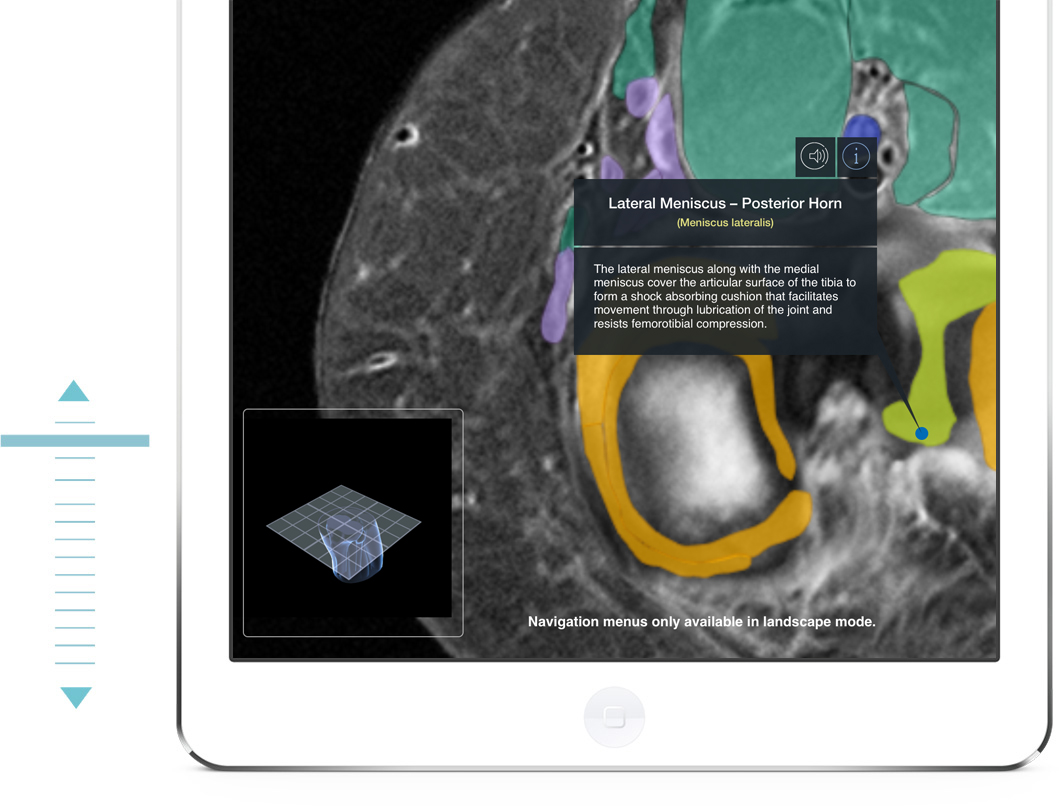
Navigate through the knee by pulling a 3D plane (Axial, Coronal or Sagittal) through a 3D knee to virtually slice through the structures. The 3D Model of the knee also allows the user to easily identify the orientation and location of the scan. There are three planes that can be chosen, with 19 scans for each plane. These 171 images can be viewed in two different scan types, or in anatomical slices.
3D Technology and Stunning Graphics

Compare

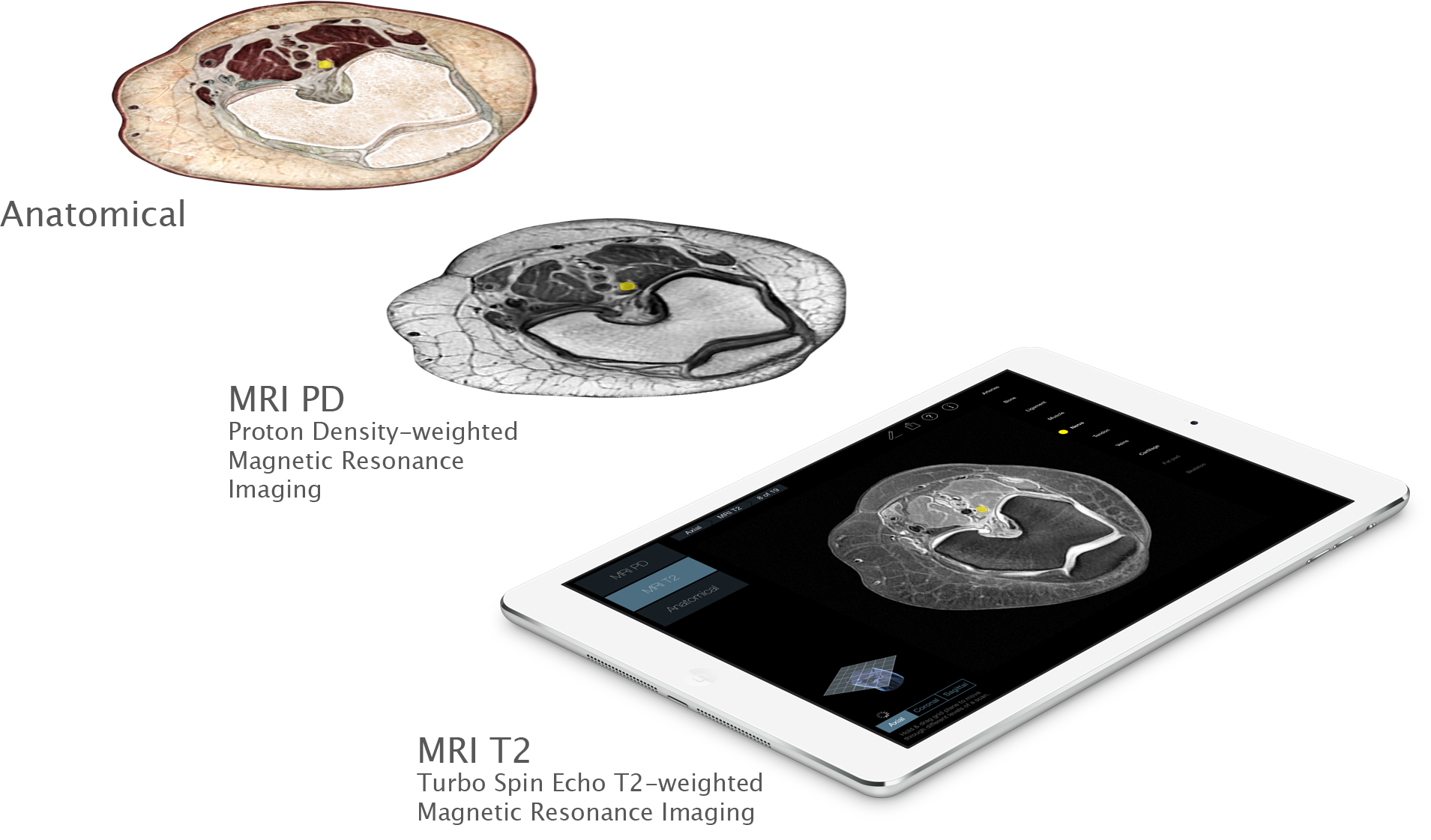
Radiology – Knee contains two different scan types as well as anatomical slices. These scan types are: MRI PD and MRI T2. The scans and slices are available in all three planes: Axial, Coronal and Sagittal.
3D Technology and Stunning Graphics

Identify

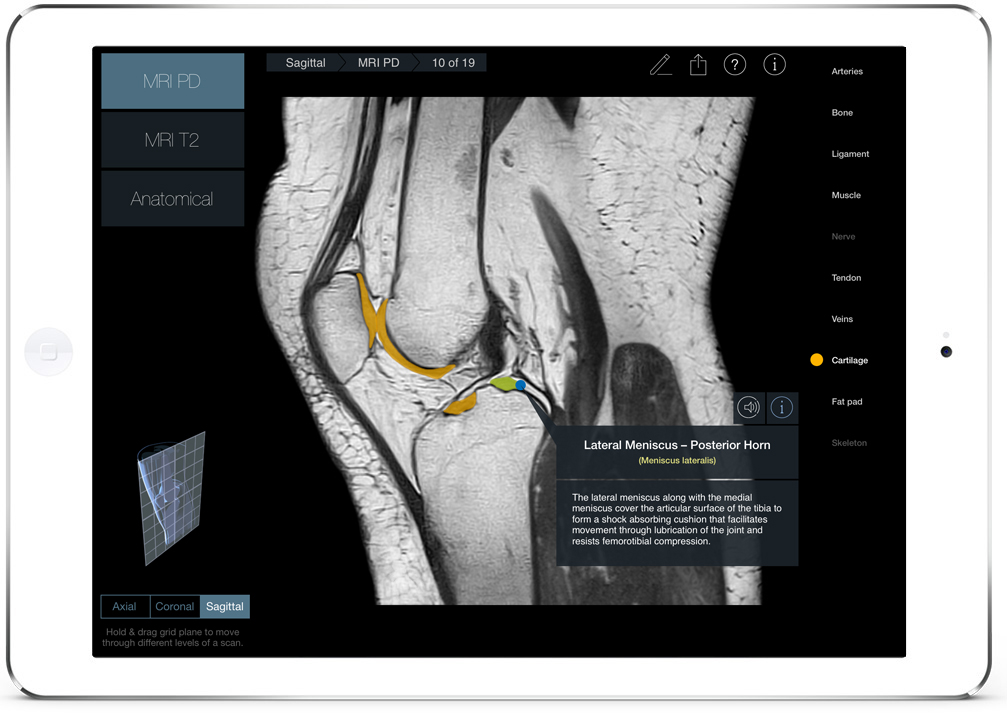
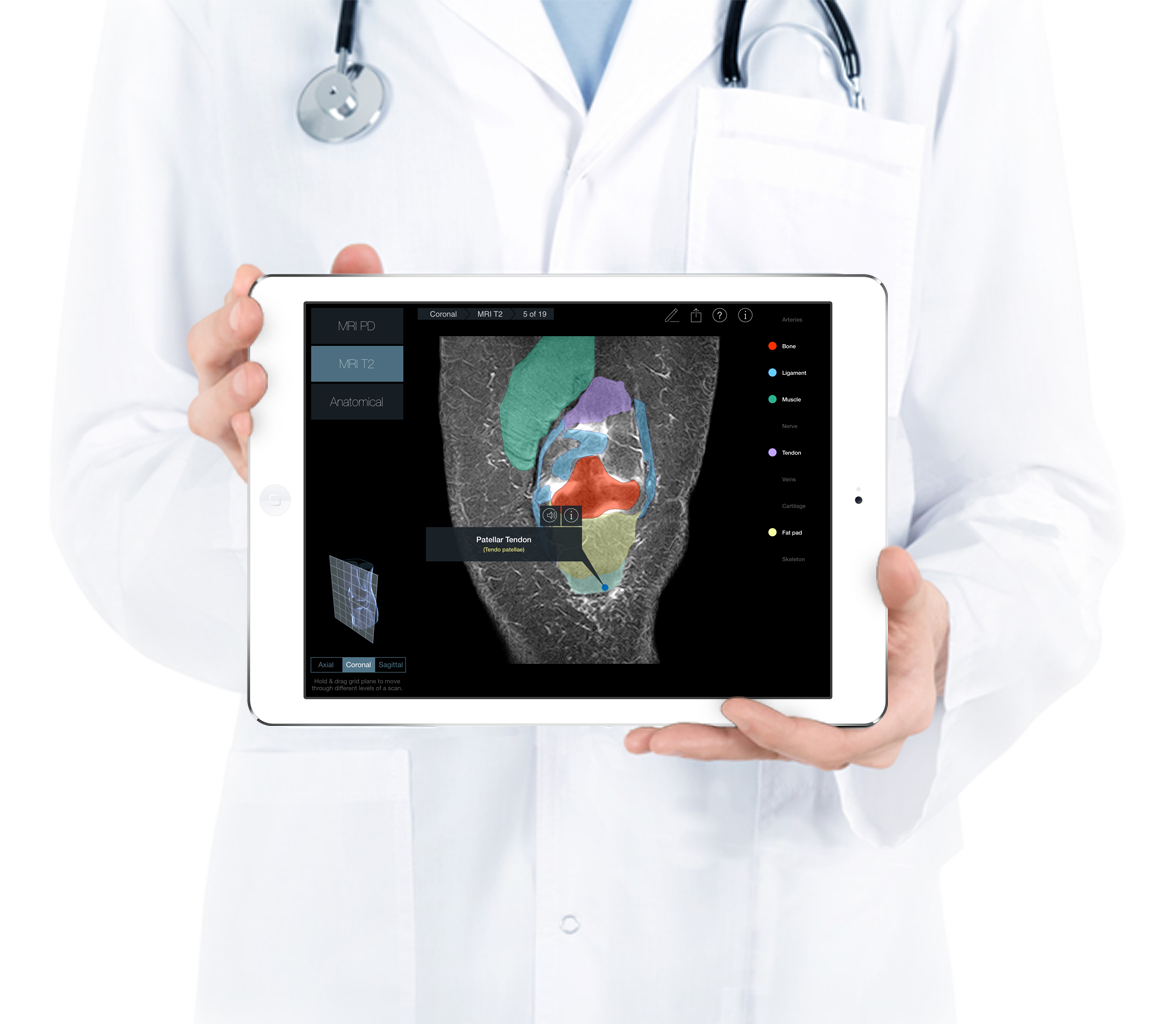
Throughout the scans are 67 individual structures that can be identified by pressing on them. Each label comes with Latin nomenclature, text description and an audio pronunciation. Individual structures are grouped into 10 categories and each category can be turned on or off to allow for clearer identification of structures.