
Infants first begin to smile consciously or socially between 6 and 12 weeks old. As we grow our smile changes. We develop teeth to replace gums. Those first set of teeth fall out to reveal our adult teeth. Sometimes those teeth may even go through changes such as braces, or maybe one day dentures. The skin around our smile may age as well with smile lines forming and age spots appearing. However, one thing that remains the same is the muscles that control and shape our smile.
The facial muscles that control a smile are in subcutaneous tissue. When these muscle contract they produce many facial expressions. They are innervated by the facial nerve (cranial nerve 7) which also aids in taste and tear production. We can divide the muscles associated with smiling into three categories orbital, nasal, and oral.
Orbital
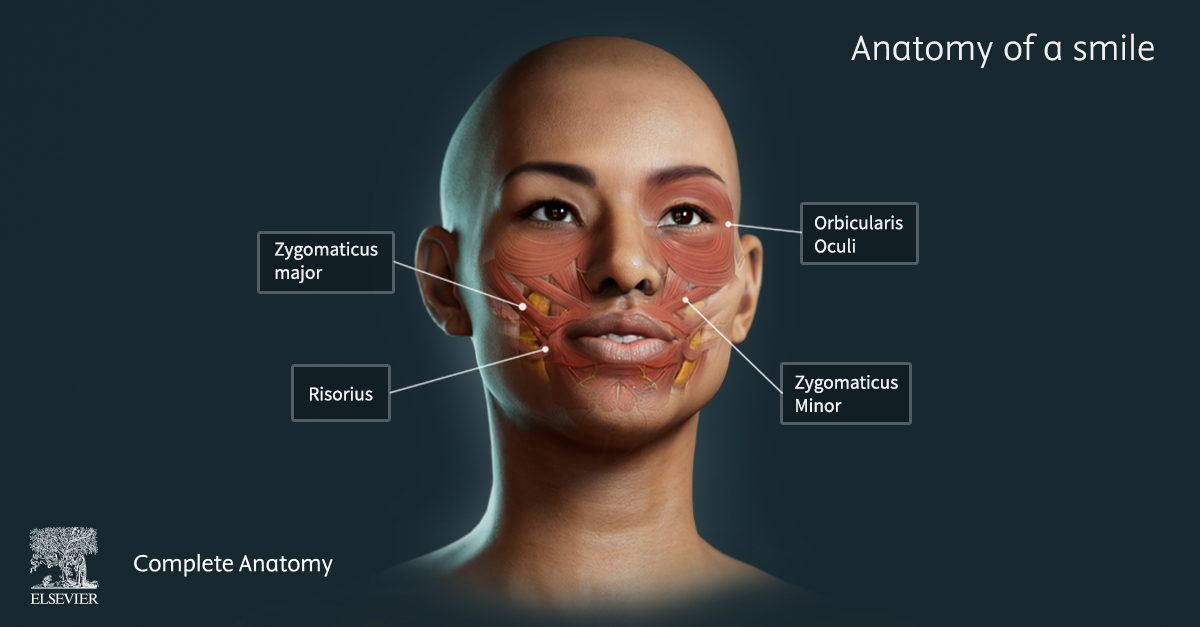
This includes the muscle around your eye, specifically orbicularis oculi. This muscle allows for the eyelids to open and close. So, whether your eyes are scrunched up in laughter or wide open in greeting, they help complete the picture of your smile.
Nasal
The nasal muscles move the nose. Nasalis, Procerus, and Depressor Septi Nasi all belong to this area. Depending on your smile, these muscles can wrinkle the nose and are also connected to the maxilla, which will form the top of your smile as it is the upper jawbone.
Oral
More importantly there are the muscles that function around the mouth. You have Zygomaticus Major, responsible for pulling the corners of the mouth upwards and outwards. Obicularis Oris surrounds the mouth like a sphincter and opens/closes the lips. Levator Anguli Oris is located near the canine teeth and helps elevate the corners of the mouth further. Levator Labii Superioris and Zygomaticus Minor also lift the upper lip. Risorius helps create a more horizontal smile by aiding in pulling the corners of the mouth more outwards.
Obliviously we can have many different smiles that engage different muscles to varying degrees. This relates to the intensity and appearance of our smile. Different combinations of these small muscle contractions determine the many different characteristics a smile can have. From a demure smirk to a full toothed grin, we use our smiles to communicate an assortment of feelings throughout the many years of our lives.